Water heaters
Water heater repair and replacement in Tinley Park
In most houses the water heater is a tank in the basement, utility room or garage. When it stops, the question is whether a part has failed or the tank itself has.
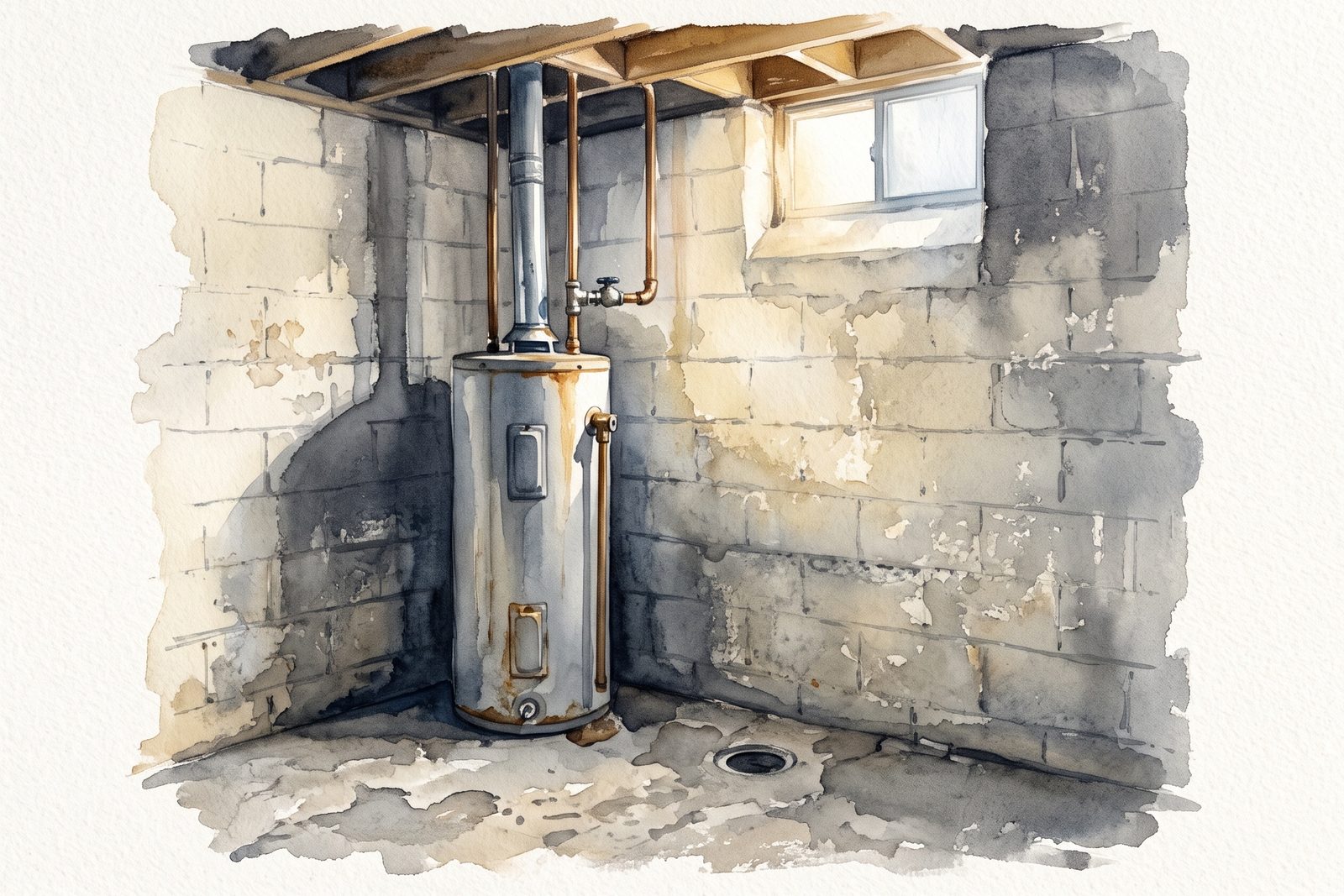
Match the symptom to the likely cause
No hot water at all (gas)
The pilot is out, the thermocouple or flame sensor has failed, or the gas valve is not opening.
No hot water at all (electric)
A tripped breaker, a failed upper element or a high-limit switch that has cut out.
Hot water runs out quickly
Sediment from years of use fills the bottom of the tank, or a dip tube has broken.
Rumbling or popping
Water trapped under a layer of sediment boils against the burner.
Rusty hot water
The anode rod is used up and the tank lining may be rusting.
Water at the base
Check the relief valve pipe first. A drip from the tank seam itself cannot be repaired.
The main decision
Repair or replace?
A repair usually makes sense when
- the tank is dry and the fault is a part: thermocouple, gas valve, element, thermostat
- the relief valve is dripping but the tank seams are sound
- the heater is still within the age its label suggests
Replacement is usually the answer when
- water is coming from the tank body
- the hot water is rusty and the anode is gone
- the heater is old and a costly part has failed
- you need more hot water than the tank can give
Choosing the new one
Tank or tankless
A new tank heater is the simpler swap. It goes in the same spot, uses the same gas line and vent in most cases, and the size is chosen from how many people shower in the morning.
A tankless unit heats water as it flows, so it does not run out, but it needs a larger gas supply and often a new vent through the wall. In a cold-climate town the incoming water is colder in winter, so the unit must be sized for a January morning, not a July one. Hard water scale builds up inside a tankless heat exchanger, so ask how it should be flushed and how often.
Electric heat pump water heaters exist too. They need floor space and air around them, which suits an open basement better than a closet.
What a replacement involves
Drain and disconnect
The old tank is drained through a hose to the floor drain, then cut off the water, gas and vent.
Set the new heater
It goes on the floor or a stand, with new connectors, a new relief valve pipe ending near the floor, and often an expansion tank on the cold side.
Vent and gas checked
The flue must rise and seal properly so exhaust leaves the house. The gas joints are tested for leaks.
Fill, light, inspect
The tank is filled before any burner or element is turned on. In Tinley Park the village inspects permitted plumbing work.
Permits in Tinley Park
The village names water heater work on its building permit list. The company doing it must hold a Village of Tinley Park contractor license and send a copy of its plumbing license and a letter of intent before the permit is issued.
Ask whether the price includes the permit and who books the inspection. If someone offers to skip the permit, that tells you something about them.
Ask before you agree to a new heater
- What size do you recommend for this household, and why?
- Does the price include hauling away the old tank, the permit and the expansion tank?
- Will the existing vent and gas line work, or does either need changing?
- For tankless: how is it flushed, and how much more gas does it draw?
- What does the manufacturer's warranty cover, and what does your own work warranty cover, in writing?
Water heater questions
Can I relight the pilot myself?
Many gas heaters have relighting steps printed on the label. If it will not stay lit after one careful try, stop and call.
Why is there a pipe running down the side of the tank?
It carries water from the relief valve to the floor if the tank overheats or over-pressurizes. Never cap it.
How long does a swap take?
A straight tank-for-tank swap is usually part of a day. A change to tankless takes longer because of gas and venting work.
Cold shower this morning?
Say whether the heater is gas or electric and whether there is water on the floor.
Talk to a local plumbing company
For a plumbing problem in your own home: a drain, a leak, a water heater, a toilet, a sewer backup.
Call (708) 555-0130The call may be recorded by the company or network. Read the referral disclosure and the privacy policy for what that means.